
“I already have Facebook and Instagram. Do I really need a website?” Small business owners ask me this almost every week, usually right after they have asked why customers cannot find them on Google.
My honest answer is that social media is a good place to be seen, but a poor place to be found. This article explains the difference, what a small business website actually needs to do, and the few cases where social media on its own is enough.
Does a small business need a website?
For most UK small businesses, yes. A website is the one place online you own and control, it is what Google and AI assistants read to understand what you do and where you work, and it is where a customer who is ready to buy goes to check you are real before they call or enquire. Social media helps people discover you. Your website is where they decide.
Social media is rented space; a website is yours
Your Facebook page and Instagram account sit on someone else’s platform. The platform decides who sees your posts, can change the rules at any time, and can restrict or remove an account. Many owners only realise how much they depend on a platform when a post stops reaching anyone or an account is locked.
A website is different. You own the domain, the content and the enquiry form, and nobody can switch it off because an algorithm changed. That does not mean you should leave social media. It means social media should send people somewhere you control.
Why Google and AI search still rely on your website
When someone searches “accountant near me” or asks ChatGPT which builders in their area are well reviewed, the answer is built from information the search engine can read and trust. Social posts are a weak source for this. A clear website with your services, areas and contact details is a strong one.
Recent research supports this. In an August 2026 study of 14,472 citations across 1,487 local searches in the United States, Steady Demand found that 59.9% of the sources Google’s Gemini cited for local questions were the businesses’ own websites. The study covers the US market, so the UK picture may differ, but the direction is clear: if you want AI to recommend you, give it a website to read.
Your Google Business Profile matters too, and it works best when it links to a website that confirms the same name, address, phone number and services. I explain this in more detail in how to rank higher on Google Maps.
A beautiful website is not the same as a useful one
The opposite mistake is just as common. Some businesses spend months on a website that looks impressive and still brings in no enquiries. In my experience the reason is almost always the same: the site was designed around how the business wants to look, not around what a customer needs to know before they get in touch.
A website that earns its keep answers four questions within seconds:
- What do you do? Specific services, not a slogan.
- Where do you do it? The towns or areas you genuinely serve.
- Why should I trust you? Real reviews, photos of real work, qualifications.
- What do I do next? A phone number, WhatsApp link or short enquiry form on every page.
What a small business website should include
- A separate page for each main service. One page per service gives Google and AI something specific to match against each search.
- Clear location information. Your address or service area, consistent with your Google Business Profile.
- Proof. Reviews, project photos and, where clients agree, short case studies.
- Answers to common questions. The questions customers ask you by phone are the questions they type into Google.
- Fast loading on mobile. Most local searches happen on a phone.
- Enquiry tracking. Google Search Console and Analytics, so you know which pages bring enquiries.
- Your languages. If your customers search in English and Chinese, both versions should be properly written, not machine-translated.
When social media on its own is enough
I do not think every business needs a website on day one. If you are testing an idea, sell mainly through word of mouth at markets or events, or your customers only ever reach you through one platform, a well-run social account can be enough for a while.
The point to build a website is usually when one of these happens: customers start searching for you by name, you want to appear on Google Maps for your service, you are paying for ads and need a page to send people to, or you are losing enquiries to competitors who look more established online.
Where to start
If you already have a website, check it against the four questions above. If it cannot answer them quickly on a phone, that is the first thing to fix. If you are still deciding, my guide to what a website costs in the UK explains what affects the budget.
At Tiso Digital, we design websites for UK small businesses in English and Chinese, built around the services and areas customers actually search for. Tell us about your business or message us on WhatsApp, and we will tell you plainly whether a new site, a fix to your current one, or neither is the right next step.
Frequently asked questions
Is a Facebook page enough for a small business?
It can be at the very start, but a Facebook page is controlled by the platform and is a weak source for Google and AI search. Most businesses that want to be found by new customers need a website as well.
Can I use Google Business Profile instead of a website?
Your Business Profile is essential for Google Maps, but it works best alongside a website that confirms your services, areas and contact details. Google uses both to judge how relevant and well known your business is.
Does a small business website need a blog?
Not necessarily. Clear service pages and answers to common questions matter more. A blog helps when you can write genuinely useful articles about questions your customers ask.
Sources: Steady Demand, AI Citation Ledger (August 2026); Google Business Profile Help, “Tips to improve your local ranking on Google”.
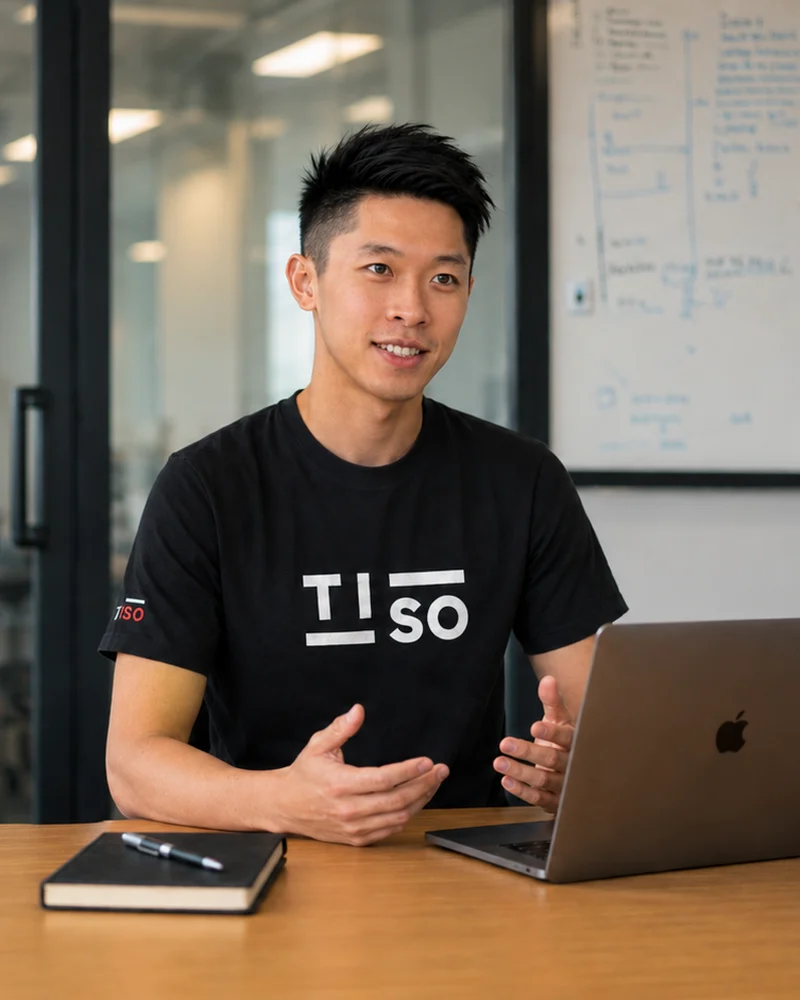
Eric Lee
Founder & CEO, Tiso Digital
Eric Lee founded Tiso Digital to give small and medium-sized businesses the kind of senior digital strategy usually reserved for large brands. He has spent more than a decade designing websites, leading SEO programmes and, more recently, helping businesses appear in AI-generated answers.
Meet our founder